There was a conservation ‘breakthrough’ for migratory species, Japan let divorced parents have joint custody of their children, and a solar innovation made the ‘impossible’ possible, plus more good news
This week’s good news roundup

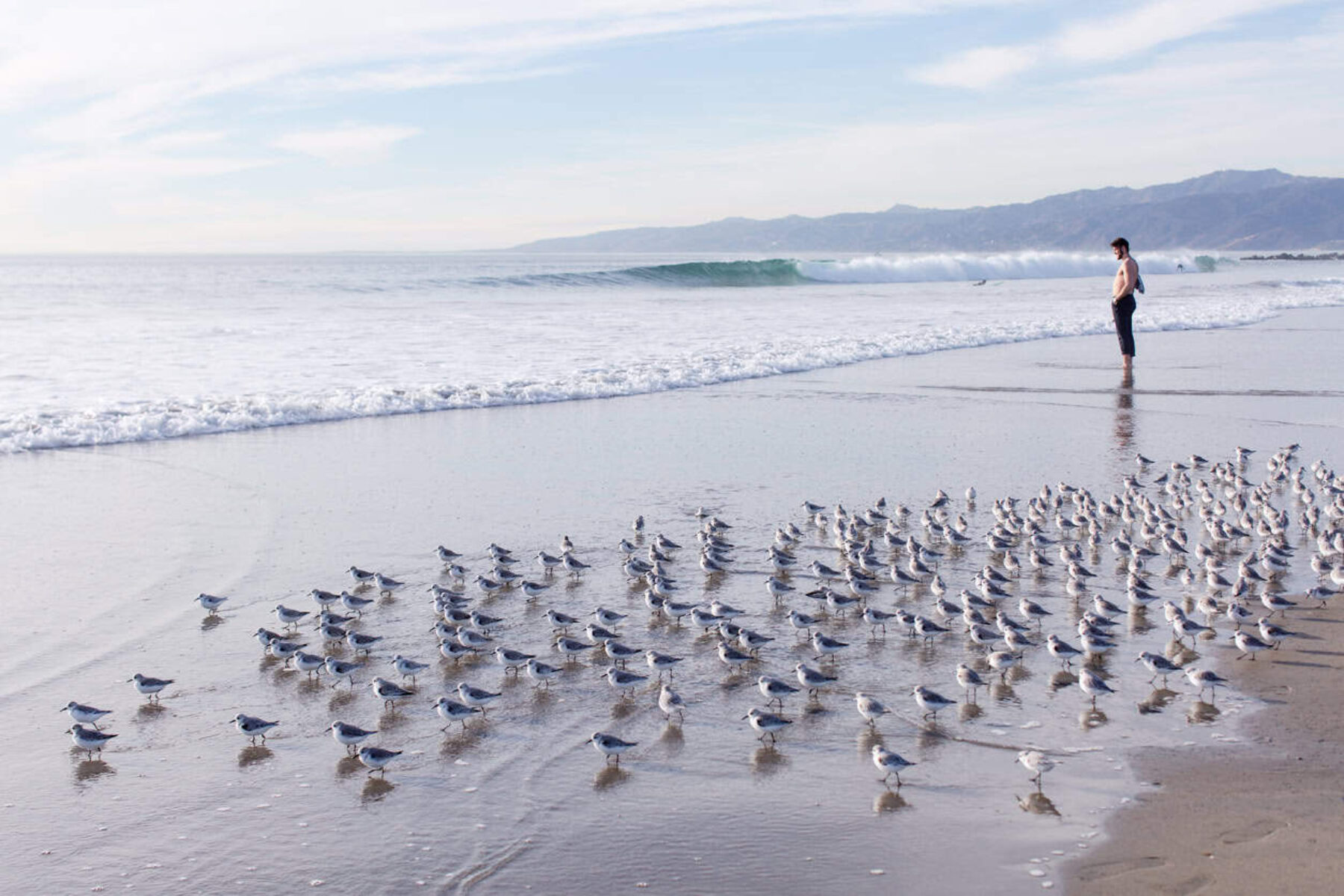
Manta rays, jaguars (pictured) and migratory birds are among the species set to gain from greater protections under a new global agreement aimed at halting biodiversity loss.
At a “pivotal moment” for nature, nations agreed this week on new measures to reduce bycatch, expanded protections for some threatened species, and – crucially – strengthen cross-border wildlife connectivity on land and sea.
The agreement was struck at the Cop15 migratory species conference in Brazil, where more than 130 governments signed off on the stronger protections. Birdlife International described the pact as “a major breakthrough for migratory birds”, while the World Wildlife Fund (WWF) said it was a “vital step for both people and nature”.
“Agreements on ‘blue corridors’ for turtles and ‘flyways’ for birds [will] aid species recovery while conserving the ecosystems essential to sustaining local communities,” said the WWF’s Colmán Ó Críodáin.
Talking is the easy bit, however. The hard part is delivering the agreement, and time is of the essence. At the conference, scientists warned that 49% of the migratory species covered by the agreement are declining – up from 44% just two years ago.
Image: Chuttersnap

A decades-long campaign to reduce road deaths in Africa stepped up a gear after nations ratified the continent’s first ever road safety charter.
Africa has the world’s most dangerous roads, with more deaths on its highways than any other region. The African Road Safety Charter seeks to change that by committing nations to halving fatalities and serious injuries by 2030.
Under the charter, countries must establish national road safety agencies, invest in safer road infrastructure, and enforce legislation that has cut deaths elsewhere, such as laws mandating seat belt use.
The charter was adopted by African heads of state in 2016, but needed 15 nations to ratify it to become law – a threshold that has been crossed after Mozambique became the latest country to do so.
The World Health Organization described the move as a “milestone for Africa”. Dr Nhan Tran, its head of injury prevention, said: “This is exactly the kind of systemic, legally-binding intervention that can help turn the rising number of road deaths around. Rooted in proven solutions, it is a clear commitment to urgent action.”
Image: Yanick Folly

Divorced couples in Japan can now seek joint custody of their children following a long-awaited revision to the country’s civil code.
Until this week, Japan had been an outlier among G7 nations because it only allowed one parent to have custody of their kids. That person, usually the mother, had the power to cut off the other parent’s access to their own children.
Under the new law, parents will be able to negotiate for joint custody in family courts, while those who divorced before the revision will be able to apply to have their arrangement reviewed.
Critics of the old system have long argued that it further erode relations between divorced parents, often causing children psychological harm. A reported one in three Japanese children with divorced parents eventually lose contact with the non-custodial parent.
Not everyone welcomes the change in the law, however. According to local media, survivors of domestic abuse fear it will be exploited by abusers, even though the courts are not permitted to grant joint custody when abuse is cited as a factor in a divorce.
Image: Brayden Prato
There’s been a “dramatic” increase in biodiversity at rewilding sites across Scotland, with bird numbers surging by 261%, analysis shows.
Researchers surveyed wildlife at more than 100 rewilding sites across Scotland, and compared the results to nearby non-rewilded areas.
“The results are astonishingly clear,” said Dr Ross Macleod, an ecologist at England’s Liverpool John Moores University, who analysed the data. “On rewilded land, biodiversity surged across the board, with the number of bird species up 261% and their breeding territories up by 546%.
“For pollinators, the variety of bumblebee and butterfly species more than doubled, their abundance increased over tenfold, and the number of nectar-rich plants they could use in the rewilded areas rose by around 250%.”
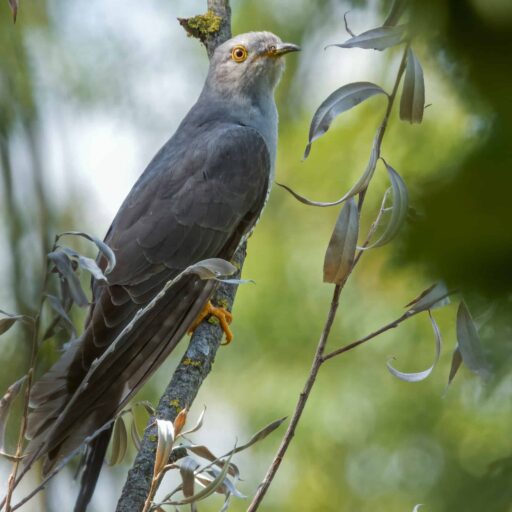
Threatened birds also saw significant increases, he added. “Species such as spotted flycatcher, cuckoo and woodcock are relatively common on the rewilded areas, bucking the national trend of almost catastrophic declines.”
The research was coordinated by SCOTLAND: The Big Picture, a conservation charity. The results, it said, provided “some of the strongest evidence yet that rewilding delivers measurable ecological recovery”.
Related: How a ‘dysfunctional’ English farm became a biodiversity hotspot
Image: Diego Rastelli

One of the UK’s rarest mammals is “thriving” again on Scotland’s Orkney islands amid a project to clear the archipelago of invasive stoats.
Stoats, which eat voles, have upset the delicate balance of the Orkney ecosystem since they arrived, pushing native wildlife to the brink.
In response, a programme to eradicate the predators from the archipelago was launched – and appears to be working. Ecologists this week reported the highest number of Orkney voles since 2019, when the initiative began.
It’s not the only species benefitting. Hen harriers, one of the UK’s rarest birds of prey, and short-eared owls have also seen their numbers rebound. Both feed on voles.
“Hen Harriers are one of the most fascinating species we monitor, so it’s excellent to see that their numbers are increasing,” said Matt Marsh, monitoring officer of the Orkney Native Wildlife Project. “Orkney voles are found nowhere else in the world … so to see historically high rates of vole activity is very encouraging.”
Image: Orkney Native Wildlife
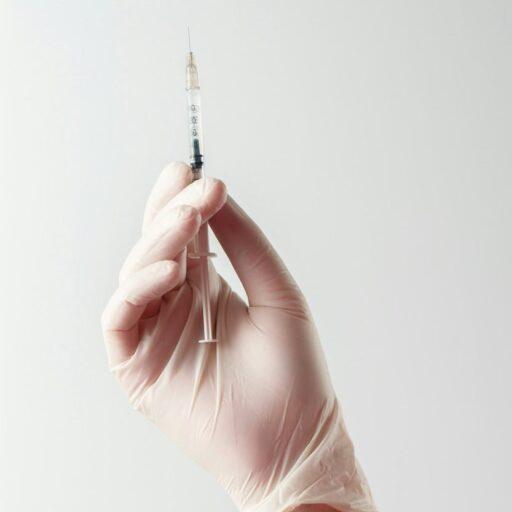
Weight loss jabs are set to be prescribed to more than one million people with cardiovascular disease in the UK to help prevent them from having a deadly heart attack or stroke, the country’s health service announced this week.
Clinical trials have shown that semaglutide – the active ingredient in weight loss jabs Wegovy and Ozempic – can help reduce the risk of a dangerous cardiovascular emergency including a heart attack or stroke, independent of the amount of weight lost.
The drug will be delivered as a weekly injection and will be prescribed alongside a healthy diet and increased physical activity.
“[This] will no doubt help save lives as cardiovascular disease is still one of the country’s biggest killers,” said Dr Sonya Babu-Narayan, clinical director of the British Heart Foundation.
“So-called ‘weight loss drugs’ like semaglutide have proven benefits beyond reducing the number on the scales – they are now considered important medicines for preventing deadly heart attacks and strokes.”
Image: Dima Solomin

Solar is already the cheapest and fastest growing source of electricity globally. Now, Japanese scientists have reported a breakthrough that could drive major efficiency gains for panels.
In a study, academics at Kyushu University claimed to have broken through the glass ceiling that has long limited the amount of sunlight that solar panels can capture, boosting efficiency from 100% to 130% – a feat that previously “seemed impossible”.
The prototype panels achieve this by capturing energy that was previously lost as heat – a development that opens up the possibility for new ultra-efficient panels.
Kyushu University said that its work “establishes a new design strategy for” solar energy amplification. However, it cautioned that its current experiments remain at the proof-of-concept stage and that further tests are planned.
Image: Moritz Kindler

Adults in the UK are engaging less with social media and becoming more “circumspect” of digital platforms amid concerns about screen time and the impact of endless scrolling on our mental health.
That’s according to a survey by the UK’s media regulator, Ofcom. It found that the number of adult users engaging with social media by posting or commenting fell from 61% in 2024 to 49% last year. The proportion of adults who felt that the benefits of being online outweighed the risks fell from 72% to 59% over the same period.
The research also pointed to a rapid adoption of AI tools among adults, plus a growing number of entrepreneurial users seeking out “side hustles” in the digital economy.
The research predates last week’s landmark court case in the US, where jurors in Los Angeles ruled that social media platforms were deliberately addictive and had damaged a young users’ mental health. The case was described as a “big tobacco” moment for digital giants.
Related: Seven ways to take back control of your digital life
Image: Muhammad Abdullah
In mad times, there is comfort in literature – particularly so this year, perhaps.
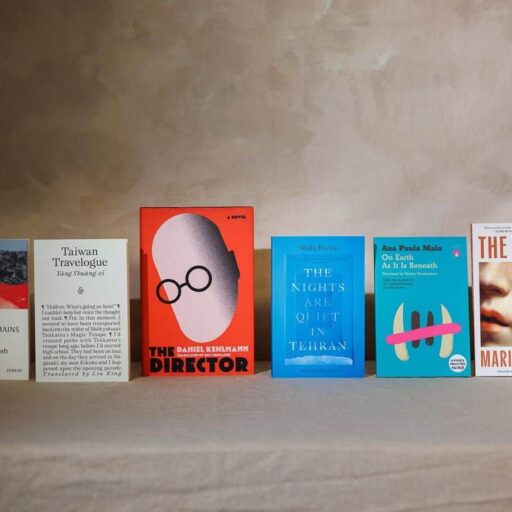
On Tuesday, the International Booker prize announced its shortlist, claiming the featured works brimmed with “hope, insight and burning humanity”.
Authors Daniel Kehlmann, Marie NDiaye, Yáng Shuāng-zǐ, Rene Karabash, Shida Bazyar and Ana Paula Maia will compete for the £50,000 prize, to be shared equally with their translators.
Their works tell the stories of a suburban witch, a morally compromised filmmaker, a bloodthirsty prison warden, a sworn virgin, a novelist and interpreter, and a multigenerational family of Iranian emigrants.
“With narratives that capture moments from across the past century, these books reverberate with history,” said Natasha Brown, chair of the judging panel. “While there’s heartbreak, brutality and isolation among these stories, their lasting effect is energising.”
The winner will be announced on 19 May.
Image: India Hobson for Booker Prize Foundation
Main image: Angelica Zander
Get your weekly fix of good news delivered to your inbox every Saturday, by signing up to the Positive News email newsletter
Be part of the solution
At Positive News, we’re not chasing clicks or profits for media moguls – we’re here to serve you and have a positive social impact. We can’t do this unless enough people like you choose to support our journalism.
Give once from just £1, or join 1,800+ others who contribute an average of £3 or more per month. Together, we can build a healthier form of media – one that focuses on solutions, progress and possibilities, and empowers people to create positive change.