
Social media had its ‘big tobacco’ moment, Chile made waves in marine conservation, and electric planes took off, plus more good news
This week’s good news roundup

In a landmark judgement that will have global implications, a US court has ruled that two of the world’s leading digital platforms were negligent in their safeguarding of a young user – a verdict described as a “big tobacco moment” for tech giants.
On Wednesday, jurors in Los Angeles ruled that Meta, which owns Instagram, Facebook and WhatsApp, and Google, owner of YouTube, intentionally built addictive platforms that had damaged a young woman’s mental health.
The 20-year-old, referred to in court as Kaley, sued Meta and YouTube over her childhood addiction to social media. Her lawyers accused Meta of ineffectively policing its own minimum age limit of 13 to access its platforms.
In the bellwether case, judges ordered the tech companies to pay Kaley $6m (£4.5m) in damages, setting a precedent for thousands of similar cases that are pending elsewhere. Both firms said that they will appeal.
“We remain confident in our record of protecting teens online,” said Meta. Google said: “This case misunderstands YouTube, which is a responsibly built streaming platform, not a social media site.”
Kaley’s lawyers said that the ruling “sends an unmistakable message that no company is above accountability when it comes to our children.” It came a day after a New Mexico jury found Meta guilty of misleading users over the safety of its platforms, enabling harm against children. Meta said that it will also appeal that ruling.
Image: Vitaly Gariev

As big tech came under the spotlight in the US, the UK launched a trial to see how social media bans impact teens.
The initiative will see 300 teens have their social apps disabled entirely, blocked overnight or capped to one hour’s use per day to compare their experiences. A control group with no such restrictions will also be monitored.
The pilot will run alongside the government’s consolation on a proposed nationwide social media ban for under-16s, like the one enforced by Australia last year. A growing list of countries are looking to follow Australia’s lead, amid concern that children’s attention is being hijacked by addictive algorithms.
Launching the UK trial, technology secretary Liz Kendall said: “We are determined to give young people the childhood they deserve and to prepare them for the future. These pilots will give us the evidence we need to take the next steps, informed by the experiences of families themselves.”
Image: Tim Mossholder
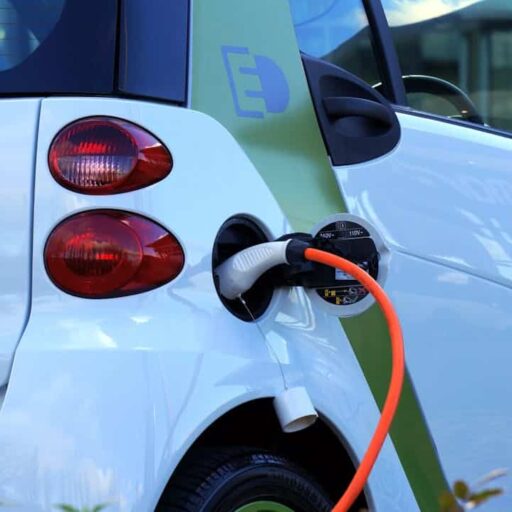
Oil is “the Achilles’ heel of the global economy”, but electric vehicles are reducing the impact of the fuel crisis caused by the conflict in the Middle East.
So finds a new report by the thinktank Ember, which estimates that electric vehicles displaced 1.7m barrels of oil per day globally last year – up from 1.3m barrels in 2024.
Ember’s estimates are conservative compared to those of Bloomberg. Earlier this month, its analysts put the figure at 2.3m barrels a day – almost on a par with the 2.4m barrels of oil exported daily by Iran.
“Oil is the Achilles’ heel of the global economy,” said Ember’s Daan Walter. “[But] unlike the oil crises of the 1970s, there is now a better alternative. Electric vehicles are increasingly cost-competitive with gasoline cars [and] are a common-sense choice for countries wishing to insulate themselves from future shocks.”
Image: Mike Bird

Renewables have been rolled out at an “unprecedented pace” across the oil-rich Middle East, where energy markets have long been dominated by fossil fuels.
That’s according to analysis of the region’s renewables landscape. It found that wind and solar capacity in the Middle East and North Africa increased by 44% in 2025. The surge was driven largely by solar, and marks a broader structural shift in energy markets historically dominated by hydrocarbons, the report noted.
The research was conducted by Dii Desert Energy, a UAE-based thinktank, and predates the current conflict in the Middle East. The war has caused a huge spike in the price of oil and gas, prompting countries double down on their green energy ambitions.
Image: Red Zeppelin

In the race to conserve our oceans, Chile has emerged as a frontrunner after its president signed a decree to create one of the world’s largest marine reserves.
Following a campaign led by ecologists and coastal communities, President Gabriel Boric signed off plans to protect 337,000 sq km of ocean around the Juan Fernández archipelago. The region teems with species, including whales, seabirds and the Juan Fernández fur seal (pictured), once thought to be extinct.
Once implemented, the protected area will link up two other marine reserves, covering a combined total of 899,268 sq km, which is roughly the size of Nigeria.
“For generations, our community has lived in harmony with the sea, relying on it for food, livelihoods, and identity,” said Julio Chamorro Solís, president of the Organización Comunitaria Funcional Mar de Juan Fernández. “By expanding our marine protections, we ensure that future generations will inherit healthy oceans, thriving fisheries, and the cultural traditions that bind us to our home.”
The designation means that Chile will soon have more than 50% of its waters under protection, far exceeding the 30% by 2030 target agreed by 190 nations in 2022.
Image: Flavien Saboureau

The proportion of US adults who smoke has dropped to 9.9% – the lowest rate in recorded history, and the first time it has fallen into single digits.
Recent analysis of government data found that the smoking rate fell from 10.8% in 2023 to 9.9% in 2024. “In public health, the number 10% is very symbolic to us,” said lead researcher Israel Agaku. “Things below 10% are considered rare.”
Challenges remain, however. Smoking is still the leading cause of preventable death in the US, and some groups are more prone to the habit than others, including those without a college degree, people with disabilities and people in rural areas. Meanwhile, the rate of e-cigarette and cigar use is unchanged, the analysis found.
Reporting on the data was also problematic. Federal cuts to the Centers for Disease Control and Prevention means that it no longer analyses its own smoking data, leaving the digital journal NEJM Evidence to fill in the blanks.
Image: Possessed Photography

Emissions-free flights have finally got lift-off after a Scottish airline became the first to introduce an all-electric plane to its network.
Loganair will use the battery powered plane on mail routes across the country, delivering letters and parcels to remote Scottish communities.
“This is a landmark day for European aviation,” said Luke Farajallah, Loganair’s CEO. “We are not talking about concepts, prototypes, or distant ambition, this is a real tangible programme of flying across our network which will provide invaluable data on how an electric aircraft could perform in a real commercial environment.”
The ALIA CTOL plane has a reported range of 336 nautical miles and a payload capacity of 560kg. It was built by BETA Technologies, a US aerospace company considered a leader in the development of electric aircraft.
In the race to reduce emissions, aviation remains a tough nut to crack. While experts say that some short-haul routes could potentially go electric, low-carbon, long-haul flights remains a distant proposition.
Image: Loganair Beta Technolgies

A bird that symbolises good fortune in Japanese culture has had some of its own after staging a remarkable recovery in the country.
Red-crowned cranes (pictured) were thought to have gone extinct in Japan in the 19th century. But this week, the Japanese ministry of environment took the charismatic bird off its list of threatened species.
According to local media, red-crowned cranes were believed to have disappeared from Japan in the early-1900s, until several dozen were discovered in the remote Kushiro Wetland in Hokkaidō around 1924.
The birds have since been the subject of ongoing conservation efforts and, according to the latest census, the population now stands at 1,927 and growing.
Image: Musicaline

Plug-in solar panels will be available in the middle aisle of British supermarkets within months, the UK government has announced.
The devices allow people without rooftops to benefit from the solar revolution on their balconies. They are popular in Europe, but have faced regulatory hurdles in the UK.
The move is part of government efforts to ramp up “clean homegrown power to get the UK off dependency on fossil fuel markets in response to the Iran war”. Other measures include mandating solar panels and heat pumps in all new homes in England from 2028.
Campaigners have long lobbied for solar to be compulsory on new houses, arguing that doing so would cut bills as well as emissions. However, some developers warned that it could increase house prices and have raised concerns about the scale of solar required.
The government announcement came as the UK energy firm Octopus reported a 27% surge in solar installation enquiries since the start of the Middle East conflict. Queries for EV leasing, it added, had surged by 36% over the same period.
Related: Amid an energy crisis, the renewables juggernaut gathers pace
Image: Newpowa

The Mediterranean diet has long been vaunted for its health benefits. Now research suggests that a variation of it could help to keep our brains sharper for longer.
The so-called ‘mind’ diet features many of the same foodstuffs as the Mediterranean diet – leafy greens, oily fish, nuts, whole-grains, olive oil – but also embraces poultry and has a strong emphasis on berries.
According to an analysis of the Framingham heart study, which examined the diets and health of adults aged 60 and over, those who followed the ‘mind’ diet showed less loss of brain volume over time. On average, they tended to have more grey matter, the tissue associated with memory and decision-making.
The research adds to a growing body of evidence linking diet with brain health, but it’s far from the only factor, according to Eef Hogervorst, professor of biological psychology at Loughborough University, England.
“Diet is only one piece of a much larger picture,” she explained. “Not smoking, staying active, keeping blood pressure and blood sugar under control, and maintaining social connections all appear to matter at least as much when it comes to keeping the brain healthy in later life.”
Image: Nadine Primeau
Main image: Creative Christians
Get your weekly fix of good news delivered to your inbox every Saturday, by signing up to the Positive News email newsletter
Be part of the solution
At Positive News, we’re not chasing clicks or profits for media moguls – we’re here to serve you and have a positive social impact. We can’t do this unless enough people like you choose to support our journalism.
Give once from just £1, or join 1,800+ others who contribute an average of £3 or more per month. Together, we can build a healthier form of media – one that focuses on solutions, progress and possibilities, and empowers people to create positive change.