
World events strengthened the case for renewables, Croatia eliminated landmines, and an ‘extinct’ species returned to England, plus more good news
This week’s good news roundup

As the Middle East conflict threatens global oil supplies, timely analysis finds that achieving net zero in the UK will be cheaper than staying hooked on fossil fuels during such a crisis.
In its latest report, the UK’s independent Climate Change Committee (CCC) put the cost of reaching net zero by 2050 at £4bn a year, or £100bn in total. This, it added, was equivalent to the energy-related costs following Russia’s invasion of Ukraine.
The fallout from the war in Iran is likely to be an ever greater shock, analysts warn. The closure of the Strait of Hormuz, a choke-point for oil shipments, is already hiking up energy prices globally.
“In light of current world events, it’s more important than ever for the UK to move away from being reliant on volatile foreign fossil fuels, to clean, domestic energy,” said Nigel Topping, the CCC’s chair .
While the war in Iran has sparked calls from some politicians to ramp up domestic fossil fuel production in the UK, analysis from Carbon Brief – also published this week – finds that doing so would have a negligible impact on energy security.
“The continued expansion of renewables and low-carbon technologies offers far greater protection against volatile gas imports than new domestic drilling,” it found.
Image: Hryshchyshen Serhii

A decades-long mission to clear Croatia of landmines is now complete, according to the government, which pledged to help other nations achieve the same status.
Some two million landmines were laid across Croatia during the War of Independence (1991-1995), despoiling swathes of the countryside. After the conflict, an estimated one in five Croatians lived under the threat of landmines, with 41 de-miners and 208 civilians reportedly losing their lives.
Davor Božinović, Croatia’s minister of the interior, said that the arduous task of de-mining the land was “not only a technical achievement but also a fulfilled moral obligation to the victims and their families”.
With the country now free from mines, Croatia has donated dozens of de-mining robots to Ukraine, to help it clear Russian landmines.
Image: Vladimir Srajber

Restoring nature along national borders could protect European countries from land invasions while boosting biodiversity, the EU’s environment minister said this week, while praising such efforts in Finland and Poland.
While many international frontiers are a web of tangled barbed wire and high metal fences, wetlands and woodlands could prove similarly effective as a line of defence, said Jessika Roswall.
She pointed to Finland and Poland which did just that along their borders with Russia after it invaded Ukraine in 2022.
“I’ve visited them: they transfer the land to more hostile nature, leaving bushes and trees. It’s not so easy for others to cross it,” she told the Guardian. “Investing in nature and using nature as a natural border control is necessary, and increases biodiversity. It’s a win-win.”
Image: Nk Ni

A patient safety scheme has been credited with saving hundreds of lives in England since it launched.
Martha’s rule is named after Martha Mills, who died of sepsis in 2021, aged 13. Her mother Merope campaigned for patients and their loved ones to have the right to a second opinion if they are concerned about the care their relatives are receiving.
Her pleas were answered when Martha’s rule launched in September 2024. According to data from the UK’s National Health Service (NHS), more than 10,000 calls have been made to the helpline since. Of those calls, 3,457 helped identify a rapid worsening of a patient’s condition, leading to 1,885 patients receiving changes in treatment, including 446 “potentially life-saving interventions”.
“Martha’s rule is having a hugely positive effect,” said Merope Mills, who now wants it rolled out in Scotland and Wales.
Dr Ronny Cheung, consultant general paediatrician at Evelina London Children’s Hospital, said: “I’ve had Martha’s Rule invoked under my care, and while it can feel challenging initially, it’s ultimately about creating a culture where everyone… has a voice to raise concerns. This can only make the care we provide better.”
Image: Nathan Dumlao

A new drug is helping children with a rare type of epilepsy lead “healthier and happier lives”, a trial has shown.
In a new paper published in The New England Journal of Medicine, researchers found that children with Dravet syndrome had up to 91% fewer seizures while being regularly administered a new medication called zorevunersen.
The results also show, for the first time, the potential to reduce the impact of the condition on a child’s mental processes and behaviour. The study found that children’s quality of life improved over a three-year period, and that most of the treatment’s side effects were mild.
Dravet syndrome is a devastating genetic condition which causes frequent, hard-to-control seizures and long-term neurodevelopmental impairment.
“I regularly see patients with hard-to-treat genetic epilepsies with impacts that go beyond seizures, and it’s heart-breaking when treatment options are limited,” said lead author Prof Helen Cross, director of childhood epilepsy at Great Ormond Street Institute of Child Health.
“This new treatment could help children with Dravet syndrome lead much healthier and happier lives.”
Image: Mieke Campbell

The UK’s Employment Rights Act was hailed this week as “an important step forward for working women”, as analysis shows that low-paid female workers will be amongst the biggest beneficiaries.
One of the government’s flagship policies, the legislation will strengthen protections for UK workers when it comes into force next month.
The new law will give some 800,000 women access to statutory sick pay for the first time, according to the Trades Union Congress. Its research suggests that women are twice as likely as men to earn below the £125 threshold for statutory sick pay.
Other measures include curbs on exploitative zero hours contracts, better protections for new mothers and expectant women, and a day one right to paternity leave for dads. The legislation applies to England, Scotland and Wales. Northern Ireland is mulling similar legislation.
“For too long women have borne the brunt of a sick pay system that is not fit for purpose, and a culture of exploitative, insecure work,” said TUC general secretary Paul Nowak. “The Employment Rights Act is an important step forward.”
Not everyone welcomes the legislation. Opposition parties said that it would heap more costs on businesses. Research for the TUC refutes this, claiming the economic benefits for businesses will outweigh the costs.
Image: Christina M

A butterfly classed as extinct in the UK for more than 30 years has been spotted at sites across southern England, bringing hope for the beleaguered species.
Eagle-eyed nature lovers have snapped photos of large tortoiseshells in Kent, Hampshire, Sussex, Dorset, Cornwall and the Isle of Wight in the past fortnight, the charity Butterfly Conservation announced this week.
The species was once found across England and Wales, but was last recorded as a resident, breeding species in the UK in the 1980s.
“This is great news,” said Prof Richard Fox, Butterfly Conservation’s head of science. “I think it’s reasonable to assume that the species is now established in several parts of Britain.”
Nonetheless, he urged caution about the sightings. “Many species that colonise take off and become common, but some remain highly localised and can even then be lost; at the moment, for large tortoiseshell, we’re in that wait-and-see phase.”
Image: Algirdas

In a riposte to their sceptics, a study has found that heat pumps can cut energy use by up to two-thirds while easing pressure on the grid.
Researchers at Birmingham City University, England, tracked seven all-electric homes in the city over the course of a year. They found that heat pumps can help avoid spikes in demand that strain infrastructure, easing concerns that widespread electric heating could overwhelm the network.
“We currently seem to be overpredicting how much power we need in new-build housing,” Prof Richard Fitton of the University of Salford, who was not involved in the study, told Positive News.
Read the full report here.
Image: Shawn Rain
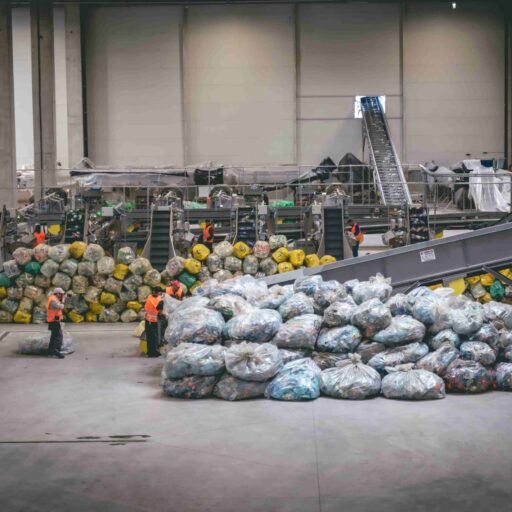
Plastic bottles – they used to be everywhere in Romania. Not anymore.
“Go to Romania now and you don’t see a bottle anywhere,” said Gemma Webb, CEO of RetuRo, which operates the world’s largest bottle deposit return scheme in Romania.
As Positive News reported this week, the facility credited with almost eradicating plastic bottle waste, providing a potential blueprint for other nations to follow.
Read the full report here.
Image: ReturRo
Main image: Anatoliy Cherkas
Get your weekly fix of good news delivered to your inbox every Saturday, by signing up to the Positive News email newsletter
Be part of the solution
At Positive News, we’re not chasing clicks or profits for media moguls – we’re here to serve you and have a positive social impact. We can’t do this unless enough people like you choose to support our journalism.
Give once from just £1, or join 1,800+ others who contribute an average of £3 or more per month. Together, we can build a healthier form of media – one that focuses on solutions, progress and possibilities, and empowers people to create positive change.