Scientists treated an ‘untreatable’ eye condition, the Global Ocean Treaty entered force, and the US murder rate plummeted, plus more good news
This week’s good news roundup

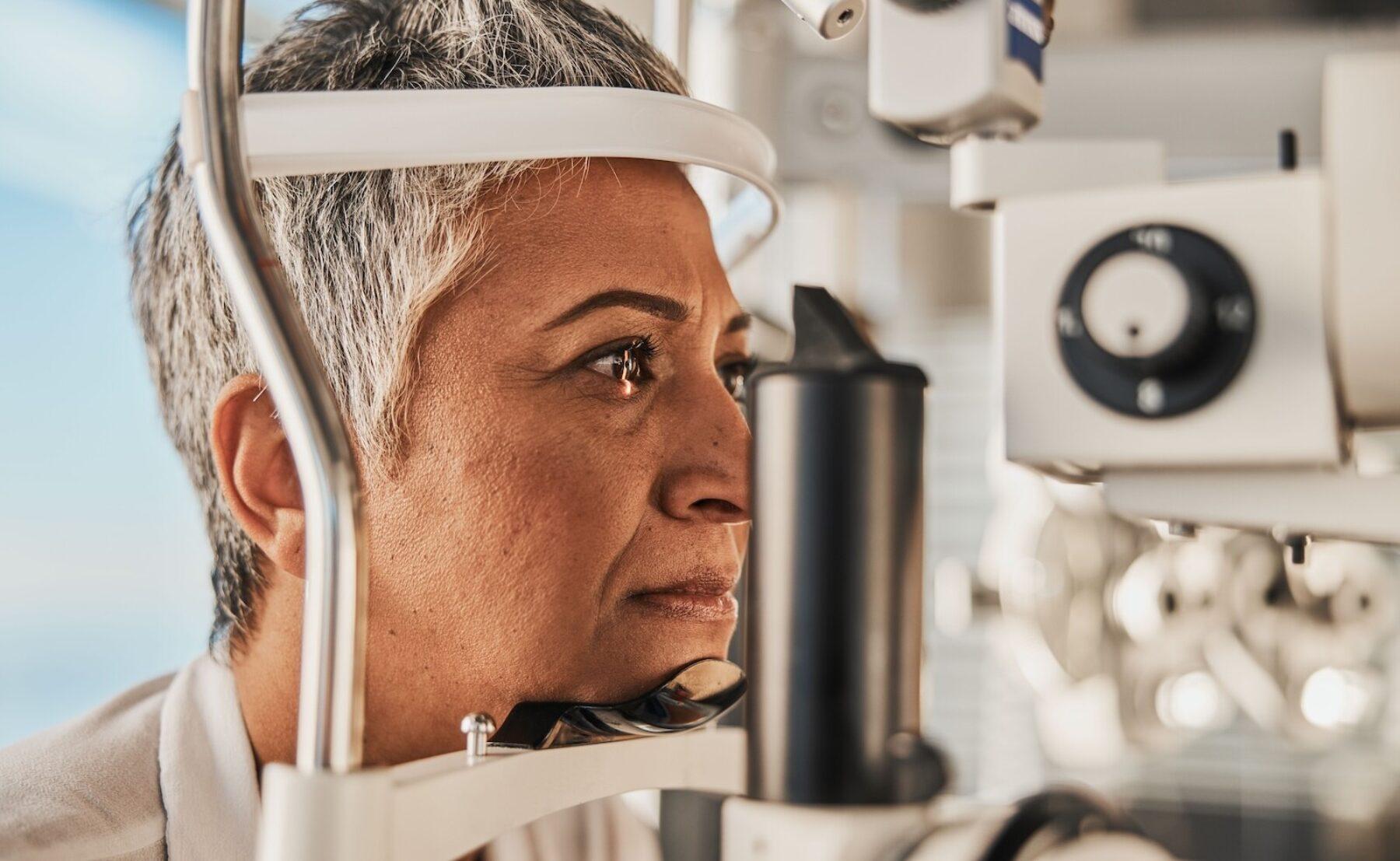
In a small but significant breakthrough, an eye condition that can cause blindness has been successfully treated for the first time, scientists said this week.
Hypotony is characterised by low eye pressure, which alters the eye’s shape and structure. Hitherto there has been no treatment, but that changed this week as Moorfields Eye Hospital in London announced that ocular injections of hydroxypropyl methylcellulose had showed promise.
In a trial, the jabs increased the size and pressure of affected eyes in seven out of eight patients, one of who was Nicki Guy (pictured).
“My sight has slowly returned,” she said. “The progress I’ve made feels extraordinary, especially knowing that patients before me have faced irreversible sight loss.”
Moorfields consultant ophthalmologist Harry Petrushkin commented: “We are excited that this simple treatment has proved so effective. This is the start of a process of understanding more about the balance of fluid inside the eye, leading to improved care for our patients.”
The development comes just months after Moorfield doctors trialled a revolutionary eye implant, which allowed people with age-related macular degeneration to read again.
Image: Moorfields Eye Hospital

For the first time in two years, humanitarian aid has provided Gazans with enough food to fulfil minimum nutritional needs, the United Nations reported this week.
However, the body warned that Israeli’s new ban on dozens of non-governmental organizations (NGOs), including those which deliver aid, threatened to impede critical assistance. Israel said that the NGOs had not met the requirements of new registration rules. Ten countries, including Canada, France and the UK, condemned the move.
The entry of aid into Gaza was a cornerstone of the ceasefire and hostage release deal agreed by Israel and Hamas in October. Despite violations, the ceasefire has broadly held.
Image: iStock

It’s been decades in the making, but on Saturday a global treaty to conserve the high seas came into effect, giving nations new powers to protect waters lying outside of national boundaries.
The Global Ocean Treaty was signed by 84 countries in 2023 and passed the threshold to become law last September after more than 60 nations formally ratified it.
Greenpeace described the treaty as a “a significant victory for ocean protection”, pointing out that less than 1% of international waters are currently fully protected.
“We don’t need to imagine what fully protected sanctuaries could achieve,” said the charity’s Ariana Densham, highlighting the Galápagos Marine Reserve as an example of how protected areas “can help wildlife bounce back”.
“If one sanctuary around a single island chain can deliver such hope and abundance, imagine what a whole network of high seas sanctuaries could do,” she said.
Image: Gerald Schombs

Eighty per cent of countries are expected to have seen a reduction in poverty in 2025, the World Bank said this week. If its forecast is realised, it would be the largest share of countries with falling poverty rates in a decade.
The World Bank’s latest Macro Poverty Outlook suggests that global progress tackling poverty has picked up again after being hampered by the pandemic and inflation and energy crises.
However, the headline stats hide a mixed global picture, it said, cautioning that poverty likely increased in about 40% of countries in sub-Saharan Africa.
“While the trends signal improvement, the magnitude of these declines are limited for some countries,” it added. “Ultimately, global progress toward reducing poverty remains too slow.”
Image: Varun Gaba


The murder rate in the US registered its sharpest ever fall in 2025, preliminary data suggests.
According to the Real-Time Crime Index, there was a “remarkable drop in crime” last year across the board, particularly murders.
It’s not a new trend. Jeff Asher, who compiles the index, noted that the US murder rate has been falling sharply since 2023. He expects FBI data, due to be published in the second half of 2026, to confirm his findings that the US homicide rate fell by a historic amount in 2025.
Despite the good news, some 14,000 people were murdered in the US last year. Asher acknowledged that was “still far too many”, but said that the latest stats pointed to “tremendous progress that should be celebrated”.
Image: Clay Leconey

A trailblazing rewilding site in England has recorded a 900% increase in the number of breeding birds in just 20 years, offering hope for imperilled wildlife.
A two-decade ecological review of the 3,500-acre Knepp rewilding estate in Sussex points to “a dramatic recovery in wildlife”, revealing how butterfly numbers have doubled in some areas, while dragonflies and damselflies have increased by nearly 900%.
The transformation of Knepp from an unprofitable farm into a biodiversity hotspot was outlined in Isabella Tree’s hit book Wilding.
“We’ve gone from a monoculture landscape to a rich mosaic of parkland, scrub, hedgerows, glades and grassland,” said Fleur Dobner, a Knepp ecologist. “The trend is strongly positive and still increasing year on year.”
Knepp has become a sanctuary for endangered birds, including turtle doves and nightingales, numbers of which have risen by 600% and 511% respectively while declining elsewhere.
“The uplift in biodiversity shows how much life the land can hold,” said Tree. “We should be much more ambitious for our nature reserves and rewilding projects.”
Read the full story here.
Image: Little owls at Knepp. Credit: Ned Burrell

Energy bills in the UK were around a third lower last year than they would have been without the country’s windfarms.
That’s according to new analysis by the Energy and Climate Intelligence Unity (ECIU), a thinktank. It said that electricity was traded on day-ahead markets at an average of £83 per megawatt-hour (MWh) last year – a pricetag that would have been as high as £121 per MWh had windfarms not limited the role that gas plays in setting prices.
“With the rollercoaster of gas prices over the past few years … this is a reminder that more renewables means more stability,” said Jess Ralston, an energy analyst at the ECIU.
The news will leave many asking why energy bills haven’t gone down. However, falling wholesale costs have been offset by investments in the grid and levies to support other energy projects, such as Sizewell C nuclear power station. Such levies are set to be removed in April, bringing some relief to households.
Image: Tuna Ekici

Dirty diesel is in terminal decline in the UK and could start disappearing from petrol stations by the end of the decade due to lack of demand.
That’s according to fresh research from the thinktank New AutoMotive, which said that the UK passed peak diesel in 2017 – good news for public health as particles from spent diesel are linked with chronic diseases, including asthma.
According to New AutoMotive, there are around 9.9m diesel cars on UK roads – a figure that’s set to crash to under 250,000 by 2035. By contrast, the number of diesel vans hit a new peak in 2025, while the number of diesel lorries remained steady.
Even so, New AutoMotive said that the direction of travel is clear. In a sign of just how quickly the UK’s car fleet is changing, the report forecast that electric cars would be more numerous in the UK than their diesel rivals by 2030.
Image: Ferdinand Stohr

While many in the west believe that people’s behaviour is getting worse, fresh research debunks the theory of societal decline.
Unpicking the evidence was Dr Paul Hanel, a psychology expert, who said that the mainstream media’s bias towards negative news was partly to blame for the perception gap.
“The evidence suggests that moral decline is not happening, even if there are examples of some bad behaviour on the rise,” he said.
Read the full story here.
Image: Alex Alvarez
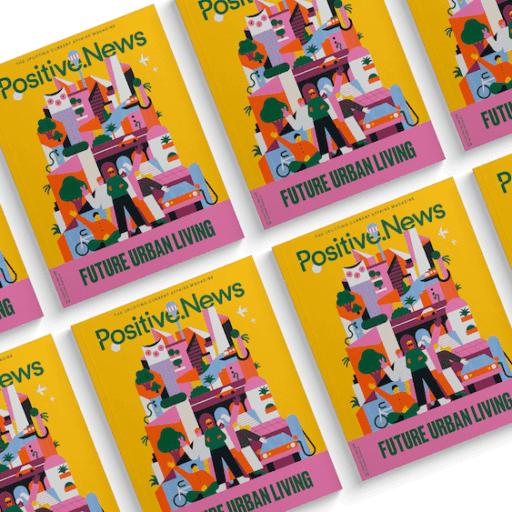
If your New Year’s resolution was to improve your media diet, then take inspiration from the new issue of Positive News magazine.
In it we take a deep dive into the future of urban living, exploring how new technologies are making cities more efficient, easier to navigate, more sustainable and, crucially, more humane.
We also turn our attention to the people shaping their cities from the ground up. From local groups taking over key businesses to organisations working to make urban life more welcoming and functional. “These stories show how cities evolve through collective effort, not just grand plans,” said editor Tom Pattinson.
Elsewhere, we speak to author Ian McEwan about how he imagines the future, visit a theatre company opening doors for people with experience of the prison system and meet older activists who have traded slippers for spray cans.
Buy your copy here.
Main image: Shutterstock
Get your weekly fix of good news delivered to your inbox every Saturday, by signing up to the Positive News email newsletter
Support solutions in 2026
At Positive News, we’re not chasing clicks or profits for media moguls – we’re here to serve you and have a positive social impact. We can’t do this unless enough people like you choose to support our journalism.
Give once from just £1, or join 1,800+ others who contribute an average of £3 or more per month. Together, we can build a healthier form of media – one that focuses on solutions, progress and possibilities, and empowers people to create positive change.