Scientists treated the ‘untreatable’, economies decoupled from emissions, and a ‘lost’ bird is returning to London, plus more good news
This week’s good news roundup

A world-first gene therapy which turns white blood cells into a disease-busting “living drug” has reversed previously untreatable blood cancers, scientists said this week.
Great Ormond Street Hospital (GOSH) and King’s College Hospital in London treated nine children and two adults with T-cell leukaemia using the technique, which scientists said triggered a “deep remission” in the majority. Seven are still disease-free three years later.
Developed by GOSH and University College London (UCL), the technique involves editing the genetic code of donor white T-cells to target cancer cells without attacking the patient’s body. The research was funded by Blood Cancer UK.
“A few years ago this would have been science fiction,” said UCL’s Prof Waseem Qasim. “Now we can take white blood cells from a healthy donor and change a single letter of DNA code in those cells and give them back to patients to try to tackle this hard-to-treat leukaemia.”
Back in 2022, 13-year-old Alyssa Tapley (pictured) from Leicestershire, England, was the first in the world to receive the treatment, known as BE-CAR7.
“I’ve now been able to do some of the things I thought earlier in my life it would be impossible for me to do,” said the now 16-year-old, who is cancer-free. “My ultimate goal is to become a research scientist and be part of the next big discovery that can help people like me.”
Image: Great Ormond Street Hospital

Since the Industrial Revolution, economies and emissions have been inextricably linked – growing the former meant growing the latter. Not anymore, suggests a report published on Thursday.
It found that countries responsible for 92% of the global economy are “decoupling” emissions from growth – a trend that has accelerated since 2015, when the Paris agreement was signed.
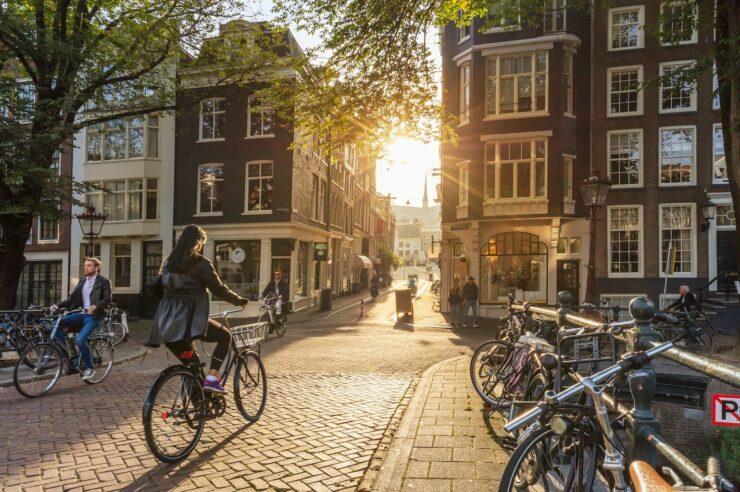
The Energy & Climate Intelligence Unit report noted that the most pronounced decouplings had taken place in Norway (pictured), Switzerland and the UK, which grew their economies while shrinking their emissions. Many emerging economies, it added, have also achieved decoupling – including Brazil, Colombia, Egypt, Jordan and Mozambique – with China, the world’s biggest polluter, not far behind.
“We’re sometimes told the world can’t cut emissions without cutting growth. The opposite is happening,” said John Lang, a co-author of the report. “Of course, global totals matter most and CO2 emissions continue to rise, though at a far slower rate than 10 years ago. [But] under the hood, the structural shift is unmistakable. More countries are bending their curves. Crucially, China’s CO2 emissions have been flat for 18 months and may have peaked.”
Some experts argue that decoupling alone is not sufficient to reduce environmental pressures, and call for a shift to economic models that respect planetary boundaries.
Image: Jarand K Lokeland
All eyes are on Australia, where a ban on social media for under-16s came into force this week.
Legislators around the world are grappling with the thorny issue of social media use among children. As well as potentially exposing them to harmful content and online predators, social media has been linked to poor mental health among young people.
“This is Australia showing enough is enough,” said Australian prime minister Anthony Albanese, as the ban came in on Wednesday, prompting many young people to try and find ways around it.
Critics of the new law argue that it infringes on young people’s rights to communicate. Others see it as a necessary measure to save childhood from the digital ether and the commercial interests of big tech.
Australia is not acting alone. A ban on social media for under-14s came into effect in the US state of Florida last week, with bi-partisan support. Meanwhile, Denmark is pressing ahead with its own ban, announced last month.
Image: Lashawn Dobbs
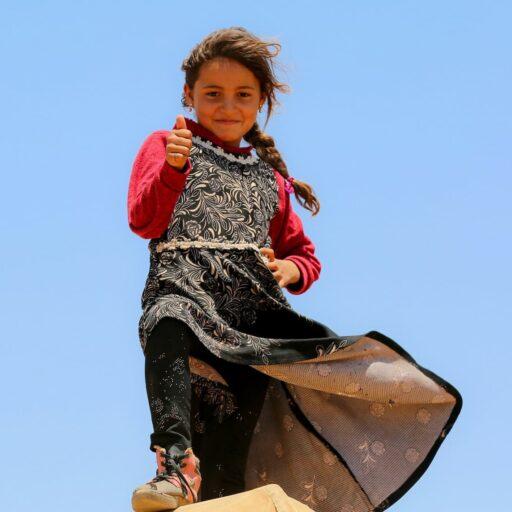
For the first time in its history, Syria joined much of the rest of the world in marking Human Rights Day on Wednesday – a symbolic move that the United Nations described as a “small but meaningful step”.
While the political and security situation in the country remains unpredictable, the UN expressed “cautious optimism” about the direction of travel a year after the fall of dictator Bashar al-Assad.
It noted that the Office of the High Commissioner for Human Rights (OHCHR), which had been blocked from operating inside Syria for many years, now has a team permanently deployed in Damascus.
The OHCHR said that it marked a “significant turning point” after a long period of monitoring human rights conditions remotely from neighbouring Lebanon.
However, it acknowledged that challenges remain, among them rebuilding the war-damaged country and “achieving justice for past and present violations”.
Image: Salah Darwish

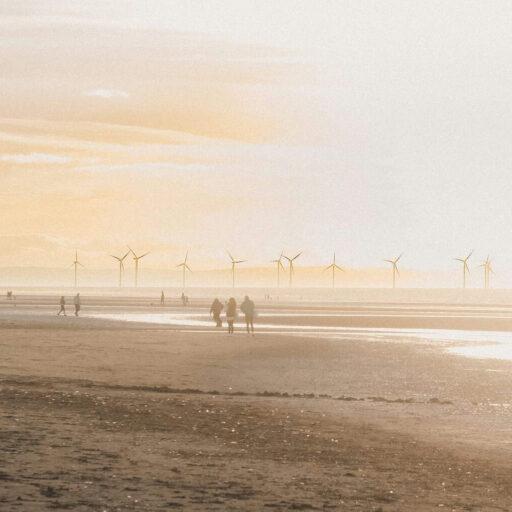
There are people who pooh-poohed the idea of wind farms, claiming they could never be a serious player in the energy mix. A new report firmly put that idea to bed this week.
Marking 25 years since the UK installed its first offshore turbine, it chronicled the country’s progress over that time, saying it amounted to a “windustrial revolution”.
The UK launched its first offshore wind farm at Blyth Harbour, northeast England, on 7 December 2000. It was the largest in the world at the time, producing 4MW of power. Fast forward 25 years and UK offshore wind now generates 16,000MW – enough to power 16m homes.
The report was published by the thinktank Ember, which said that the UK’s offshore wind sector employs around 40,000 people. The rapid rollout of offshore wind, it added, helped the UK quit coal last year.
Renewables produce around 60% of the UK’s electricity – up from just 3% in the year 2000. Last Friday, the country smashed its wind power record, producing enough wind to power 23m homes.
“It really shows what’s possible when we back clean home-grown energy,” said Kayte O’Neill, chief operating officer at the National Energy System Operator.
Image: Tuna Ekici

The rollout of new tools against malaria – including mosquito nets and vaccines – prevented an estimated 170m cases and 1m deaths in 2024, according to the World Health Organization (WHO)’s latest world malaria report.
It noted that since the WHO approved the world’s first malaria vaccines in 2021, 24 countries have introduced the jabs into their routine immunisation programmes. However, despite this progress, there were an estimated 282m malaria cases and 610,000 deaths in 2024.
“New tools for prevention of malaria are giving us new hope, but we still face significant challenges,” said Dr Tedros Adhanom Ghebreyesus, WHO director general. “Increasing numbers of cases and deaths, the growing threat of drug resistance and the impact of funding cuts all threaten to roll back the progress we have made.”
A total of 47 countries and one territory have been certified malaria-free by the WHO. Georgia, Suriname, and Timor-Leste have joined the list in 2025.
Image: Pawan Yadav
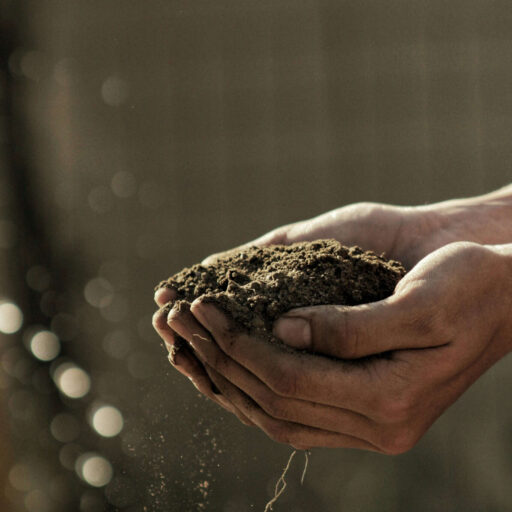
Soil. It’s the foundation for terrestrial life, yet we know relatively little about what’s beneath our feet. However, that looks set to change thanks to a groundbreaking innovation that could have big implications for farmers and the planet.
The Earth Rover Program uses seismology technology pioneered by the oil and gas industry to scan the ground, providing information on soil health, soil density and moisture levels – intel that could help farmers avoid unnecessary irrigation and fertiliser use.
It’s something that existing methods, which rely on digging up the soil, struggle to do because they are time-consuming, expensive and disruptive to the soil.
George Monbiot, an environmental journalist involved in the project, said that the cost of the technology has fallen from £7,500 per sensor to £75, making it more accessible. “In time, we should be able to use the accelerometers in mobile phones, reducing the cost to zero,” he wrote for the Guardian. “Eventually, we hope, any farmer anywhere, rich or poor, will be able to get an almost instant readout from their soil.”
This, he added, would take a lot of guesswork out of agriculture, enabling farmers to boost yields while putting less into the soil.
Image: Gabriel Jiminez
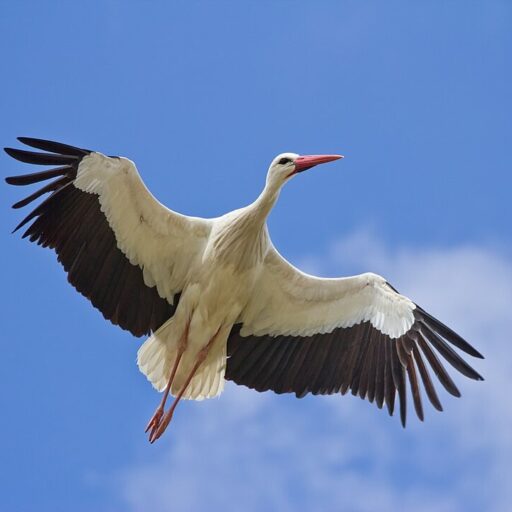
After a 600-year absence, white storks are set to be reintroduced to London as part of an urban rewilding project, it was announced this week.
The native birds were driven to extinction in the UK in the 15th century, with the last one spotted nesting atop St Giles Cathedral in Edinburgh.
However, following a successful reintroduction programme at the Knepp Estate in West Sussex, England, (“where miracles of nature happen”), a breeding colony is set to be reintroduced to Eastbrookend Country Park in Dagenham, London, next October.
The project is being led by the London Wildlife Trust, which also plans to release beavers in the park in 2027.
“Reintroducing iconic flagship species like white storks and beavers helps us all to imagine an ambitious future for nature recovery in the capital,” said Sam Davenport, director of nature recovery at London Wildlife Trust.
“It will inspire communities to connect with nature and … become a catalyst for wider ecological restoration, helping to build a greener, more resilient London.”
Image: Carlos Delgado

Europe’s largest restored oyster reef will soon take shape off the coast of England, Positive News reported this week.
Four million native oysters are set to be introduced to a manmade reef off the coast of Norfolk (pictured) in eastern England throughout 2026. Conservationists say the scale of the project could transform local waters and provide a model for marine restoration across the continent.
“Reefs on this scale can create tipping points, bringing back biodiversity at a level we haven’t seen in living memory,” said George Birch, founder of Oyster Heaven, which is leading the project.
Read the full story here.
Image: Philip Silverman/iStock
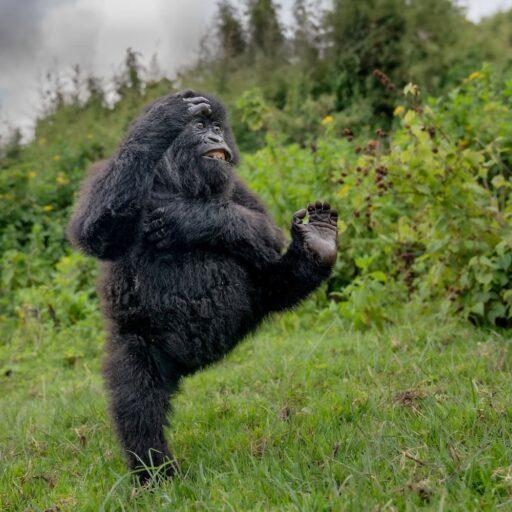
A picture of a gorilla dancing in a forest clearing has scooped top honours at the Comedy Wildlife Awards.
Taken by Mark Meth-Cohn, an amateur photographer from the UK, the picture trumped dozens of other improbable wildlife shots, including one of a duck that looked like it was smoking.
Showing nature’s funny side, the photography awards serve up fleeting images of wildlife at funny moments. But there’s a serious side to the “world’s funniest wildlife photography competition”, too, which also supports conservation efforts.
See the winning pictures here.
Image: Mark Meth-Cohn/Nikon Comedy Wildlife
Main image: Dragana Gordic
Additional reporting by Robin Eveleigh
Get your weekly fix of good news delivered to your inbox every Saturday, by signing up to the Positive News email newsletter
Be part of the solution
At Positive News, we’re not chasing clicks or profits for media moguls – we’re here to serve you and have a positive social impact. We can’t do this unless enough people like you choose to support our journalism.
Give once from just £1, or join 1,800+ others who contribute an average of £3 or more per month. Together, we can build a healthier form of media – one that focuses on solutions, progress and possibilities, and empowers people to create positive change.